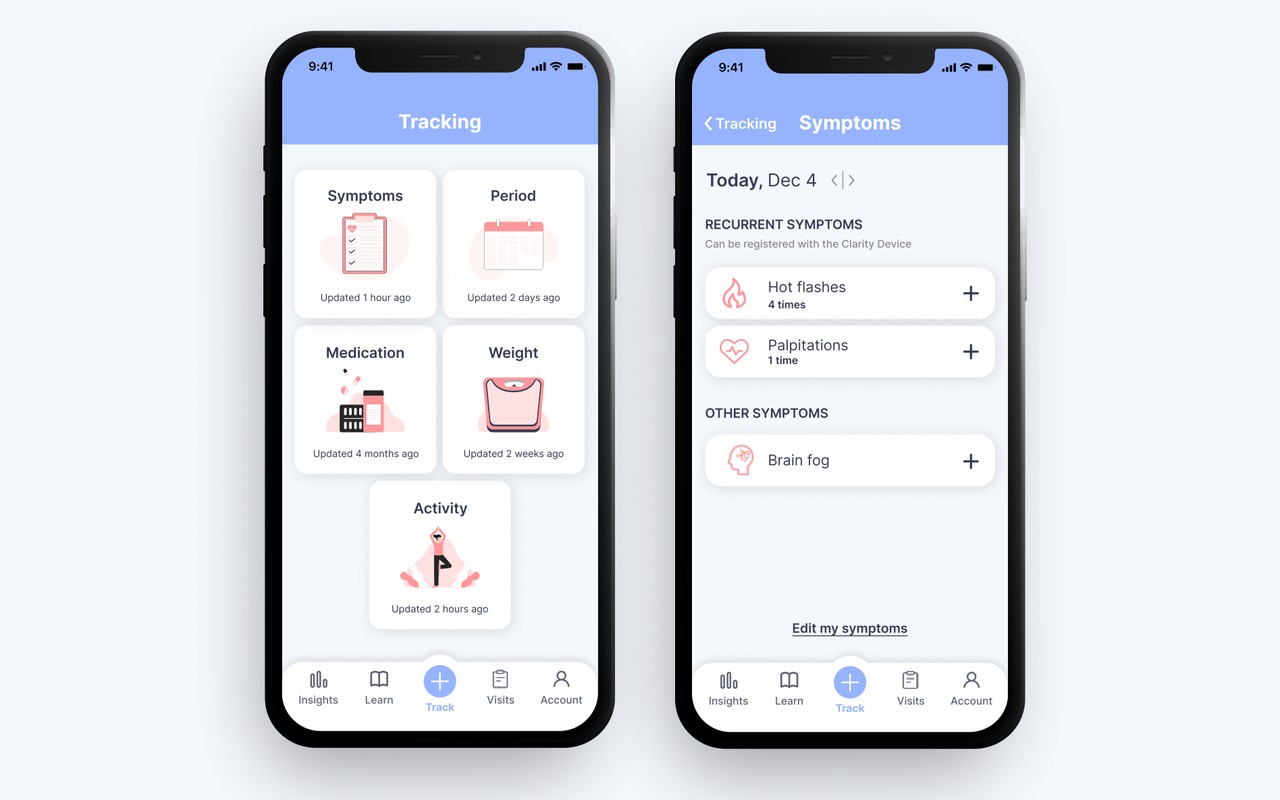
Tracking
Symptoms, period, medication, weight and activity are quick to log and together give a more complete picture.
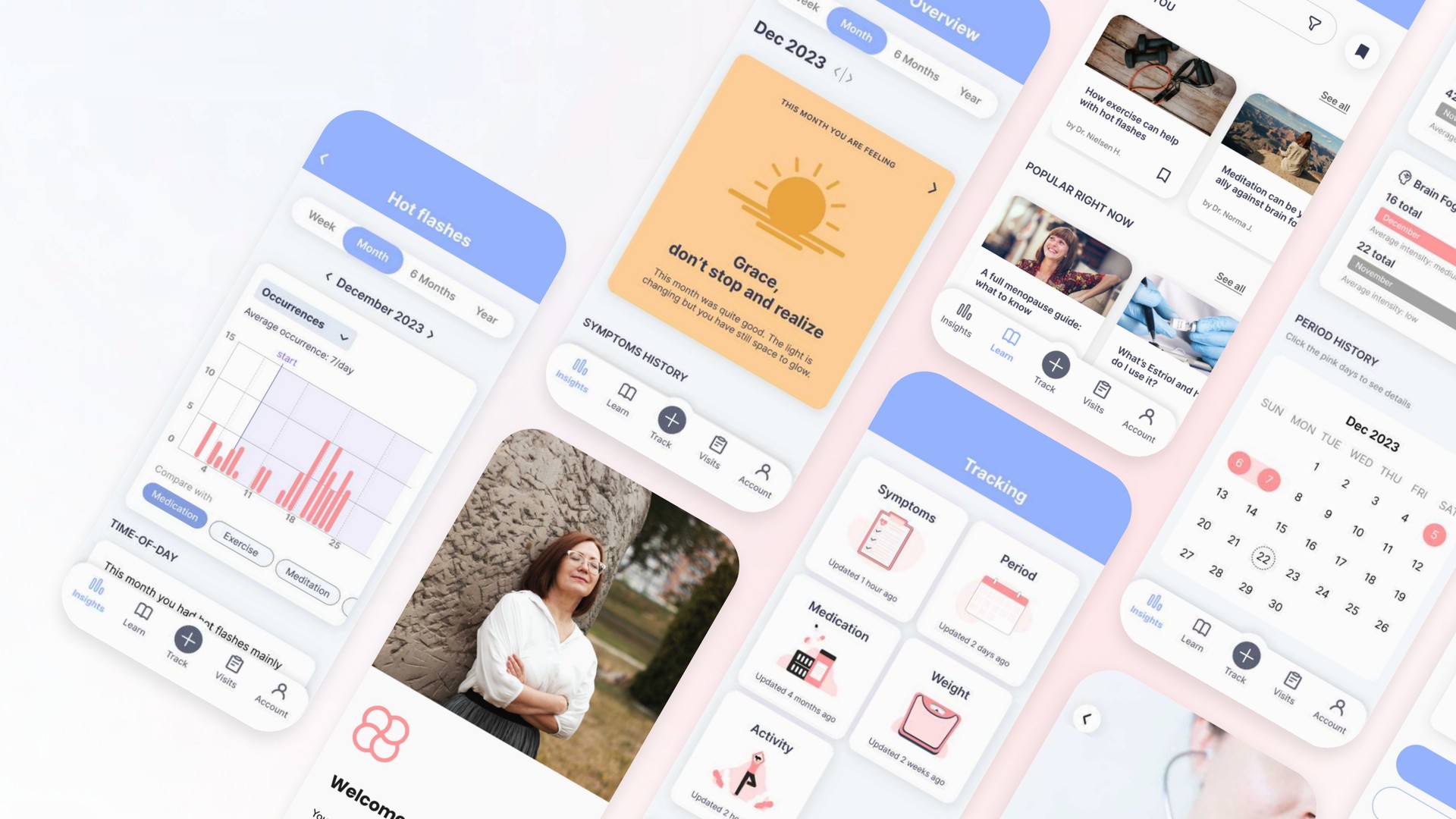
Clarity is a service for women approaching or going through menopause. An app for tracking symptoms, learning and preparing visits helps them and their doctors discuss every aspect of this stage of life.
Problem
Menopause is a turning point for most women between their late 40s and early 50s. It affects body, mood, work and relationships, yet many women go through it without knowing what to expect.
This difficulty emerges most clearly at the doctor's appointments. Our research and interviews showed that women often feel misunderstood or dismissed, and leave with open questions or even a misdiagnosis.
Solution
The service addresses women over 40 and is designed to be offered by the Italian National Health Service (SSN). In the app they log symptoms and emotions, read verified articles and write notes for the doctor, who can review the data before the appointment.
A small companion device also records recurring symptoms without opening the phone.
Symptoms, period, medication, weight and activity are quick to log and together give a more complete picture.
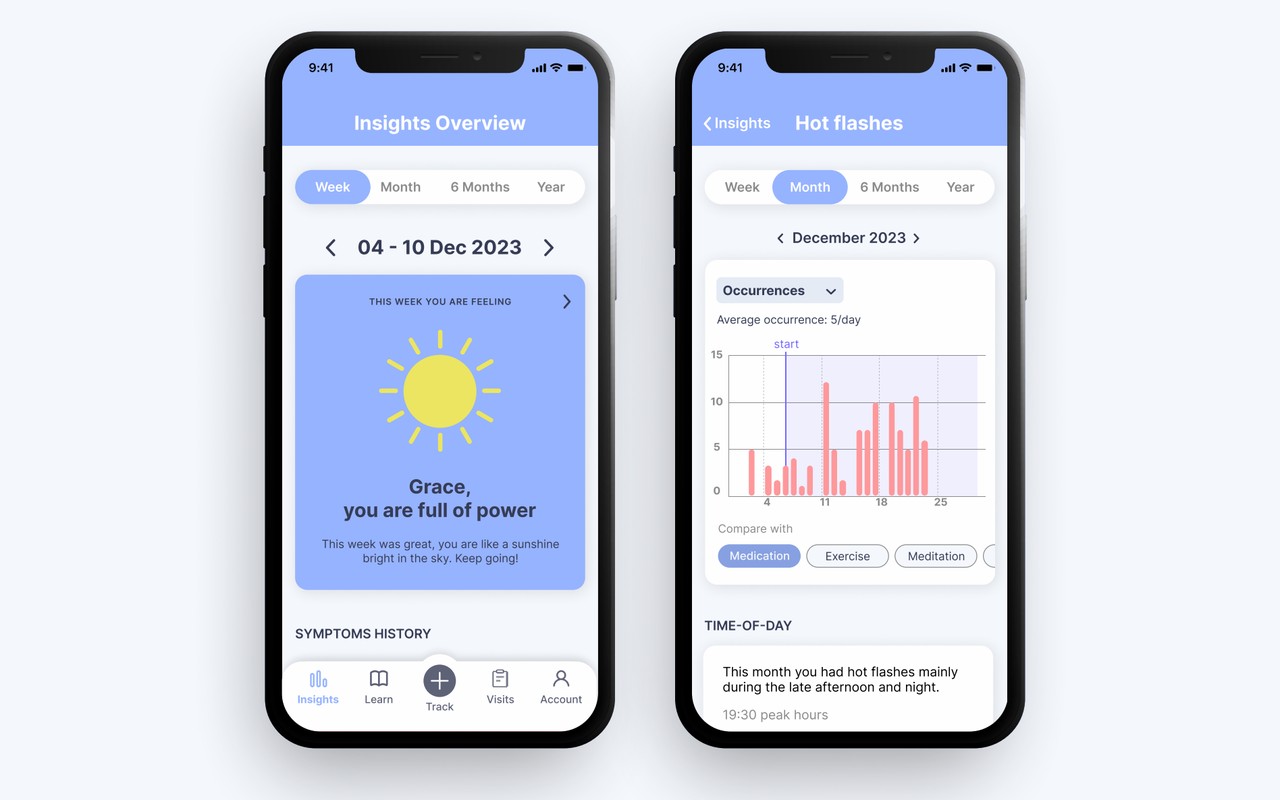
Insights show how symptoms and emotions evolve over time and how they relate to medication, exercise or meditation.
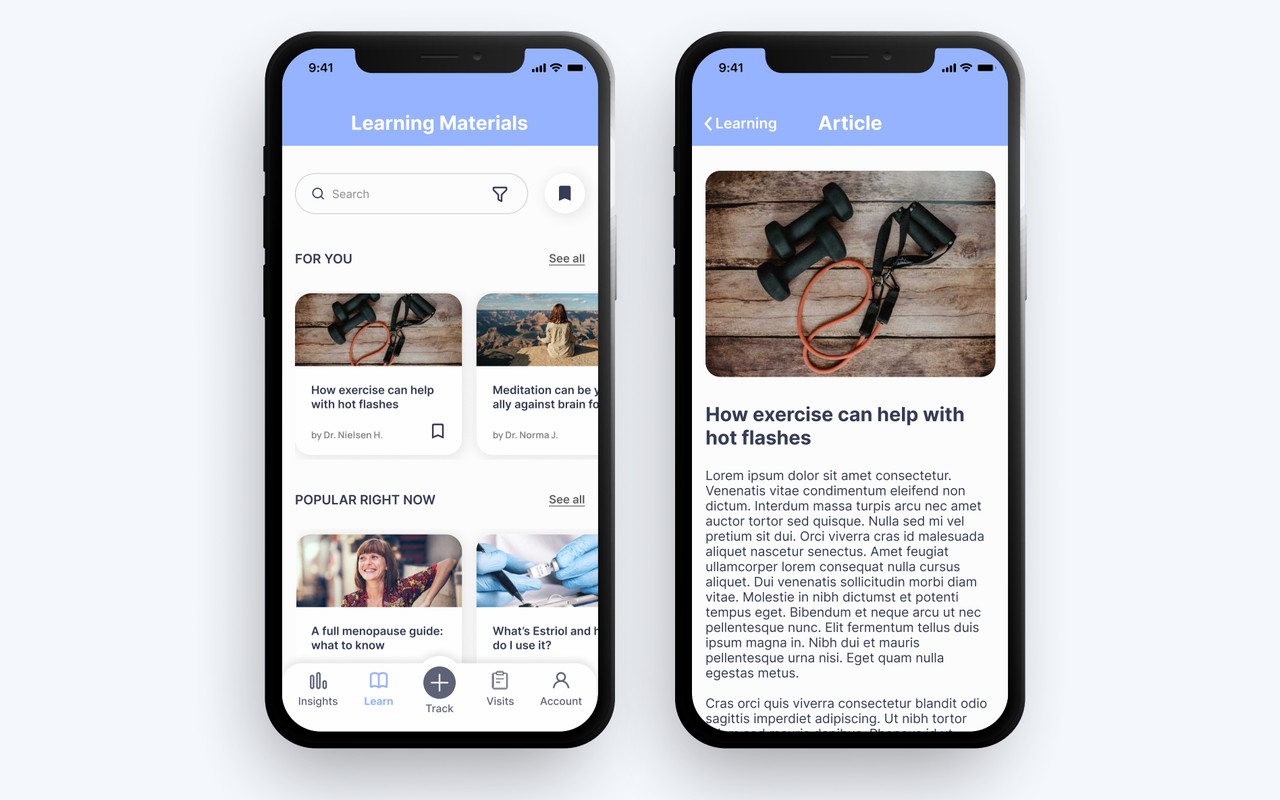
Credible articles provided by the SSN, recommended according to the symptoms being tracked.
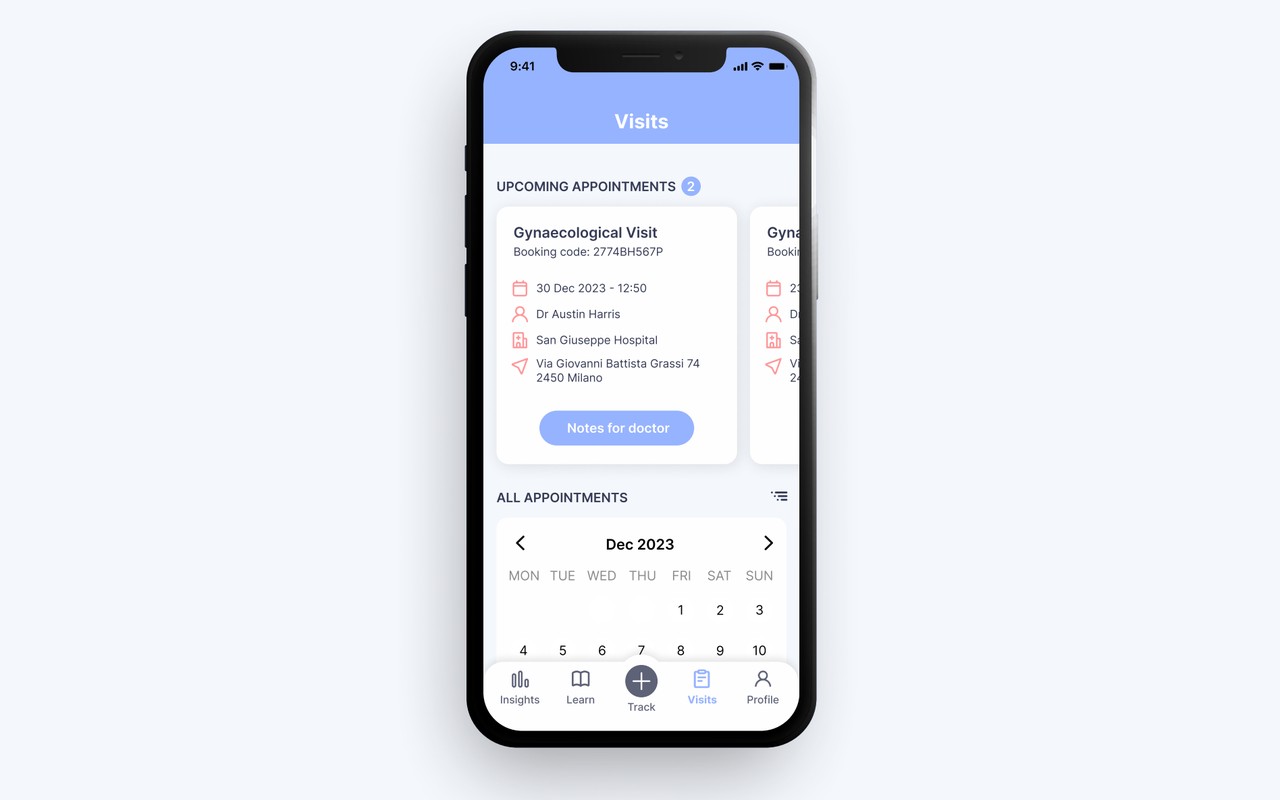
Upcoming appointments are in one place, with notes and questions to send to the doctor in advance.
Research
The brief, Smart Care, asked us to improve healthcare through universal access. Weekly sprints combined Design Thinking, Lean and Agile: each round of research narrowed the topic and tested our assumptions.
Papers and surveys on women's health and menopause
Most women are not informed about menopausal symptoms or about the measures to take.
Semi-structured interviews with medical students, doctors and women
The doctor's visit is a fundamental pain point. One gynecologist described a tendency to treat menopause as mere aging.
Existing apps and products for menopause and women's health
Many initiatives already help women manage individual symptoms.
Facebook groups, Google and Instagram results and comments, international and Italian
Women look for natural remedies, weight control and emotional support. Asking online feels easier than searching for verified sources.
The path through menopause, with steps, tasks and emotional responses
The doctor's visit stood out as the crucial point of the whole journey.
This became our design question: how might we ensure that every aspect of women's menopausal journey is discussed during appointments with the doctor?
User journey
Grace, our persona, is a 47-year-old office manager. She has the first symptoms of menopause, such as hot flashes, palpitations and brain fog, without knowing what is happening, and they affect her work and wellbeing. She wants to express her symptoms clearly and be more involved in her care.
Grace receives an email from the SSN with a survey on menopause.
After completing the survey, she downloads Clarity.
She logs her symptoms and reads credible information.
Based on her data, the app suggests booking an appointment.
She pays attention to her body and notes down her questions.
The doctor has already reviewed her data, and the conversation is clear.
System
The SSN invites women over 40 and supplies medical records and appointments. In the app, tracked symptoms personalize the articles and feed the insights, which suggest when a visit is needed. Data and notes reach the doctor before the appointment.
Testing
Paper prototypes, usability tests with Maze and interviews led to mid-fidelity prototypes, which we tested for a full day with more than 40 people. Each tester experienced two simulated doctor's visits: the first unprepared, the second after using Clarity. After each one, they marked how they felt on the PrEmo emotion wheel.
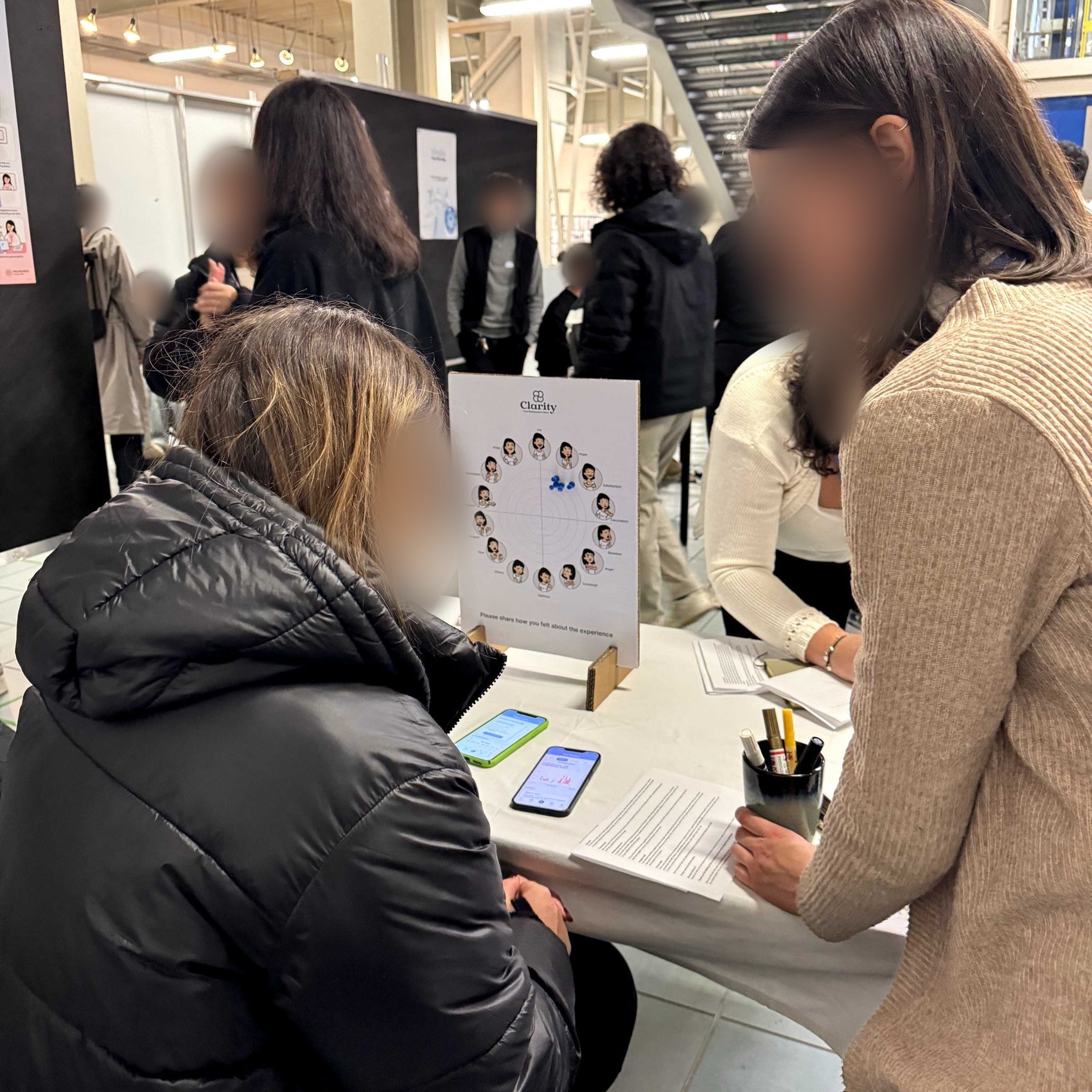
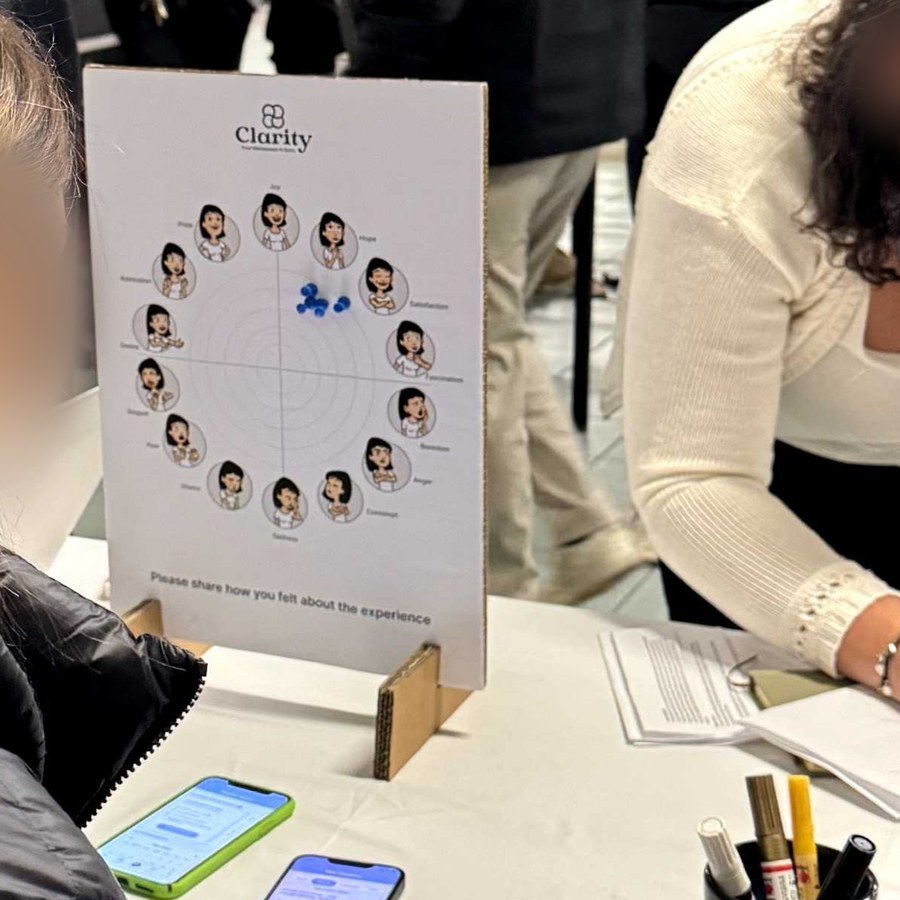
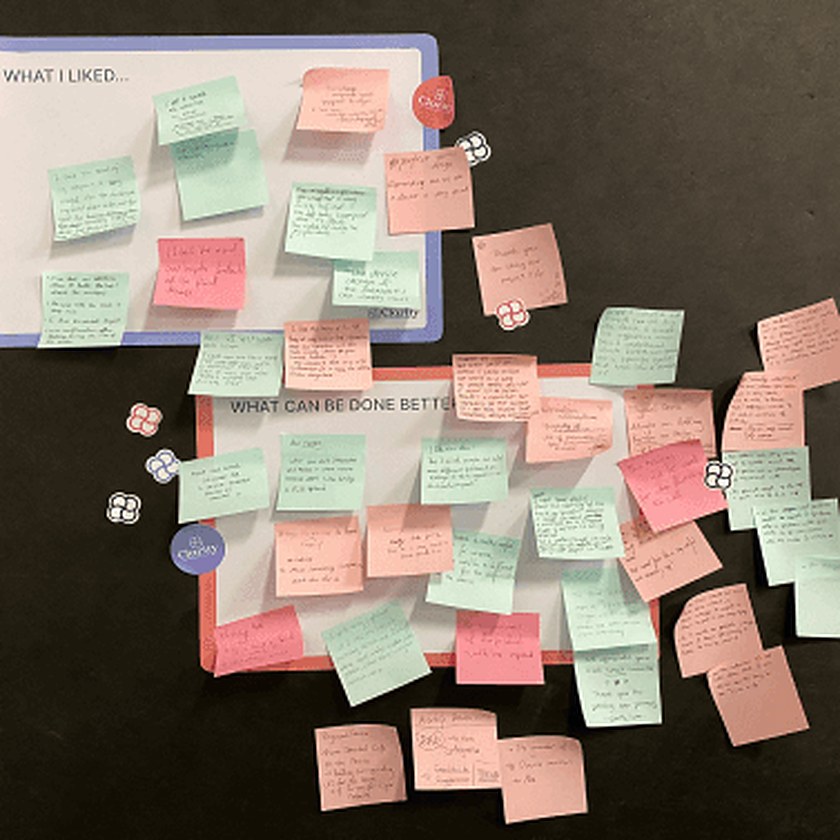
Interviews with women and doctors pointed in the same direction: preparation can save time, keep details from being forgotten and leave room for what matters. Testing also led to three changes in the app.
Looking back
Menopause touches almost every part of life, and story mapping helped us move from the whole experience to a single moment, the appointment. The project also taught me how much tone matters when an interface talks about health.
The visits were simulated, so the next step is testing the new version with the target audience. The doctor's interface still has to be designed and tested, and the system could be adapted to other health conditions.